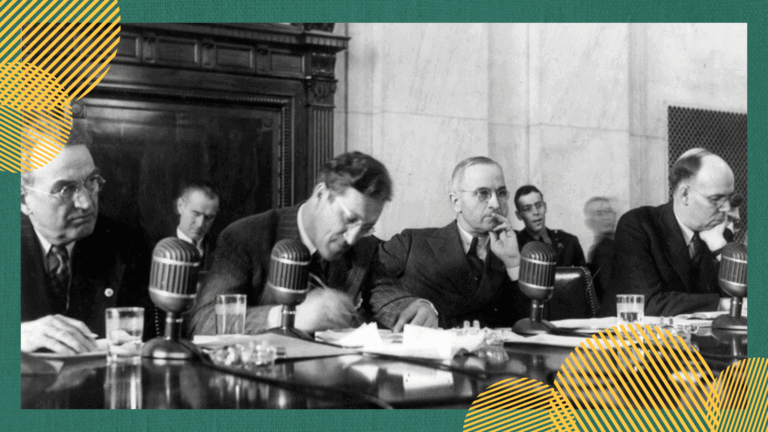
Truman Committee Lesson Plan
This lesson, designed for high school history students, explores the role of congressional oversight during World War II through the lens of the Committee to Investigate the National Defense Program, better known as the Truman Committee. Founded by then-Senator Harry S. Truman, this bipartisan Senate committee examined waste, fraud, inefficiency, and mismanagement in the nation’s rapidly expanding national defense program. Students investigate real committee cases involving military production, wartime spending, housing shortages, labor conditions, and discrimination on the home front. Through primary sources, photographs, newspaper accounts, oral histories, and committee reports, students evaluate how oversight investigations influenced government decision-making and public accountability.
Students also explore how wartime mobilization created new opportunities for women and African Americans while exposing ongoing barriers to equality. By analyzing evidence from Truman Committee investigations, learners develop a deeper understanding of the relationship between government oversight, public trust, and democratic accountability during periods of national emergency.
This lesson plan also presents a unique opportunity for place-based education and examining Michigan’s role in the country’s success during WWII. Several of the lesson’s sources and the video feature the Willow Run Bomber Plant and experiences in Ypsilanti, Michigan.
Guided by the compelling question “How important is congressional oversight in times of crisis?” students examine how Congress worked to ensure that public resources were used effectively while the United States mobilized for war.
This free download includes:
- Lesson plan
- This two-to-three-day inquiry lesson gives students the opportunity to analyze the breadth of topics the Truman committee investigated during the Second World War, and evaluate the effectiveness of the Truman Committee’s investigations on the success of the American homefront war effort.
- Primary and Secondary sources
- Harry Truman Radio Address (1941) – an adapted transcript of Senator Harry Truman’s national radio broadcast introducing the committee and explaining why citizens should help identify waste, fraud, and inefficiency in the defense program.
- Case studies from the Truman Investigation including: Senator Albert “Happy” Chandler’s Swimming Pool, the Carnegie-Illinois Steel reports, the Willow Run Bomber Plant, and the CANOL Pipeline Project.
- Student Worksheets
- Graphic organizers and source analysis activities that help students categorize investigations according to their military, economic, and social impacts while evaluating the committee’s role in wartime mobilization.
- Webquest activity for students to explore a wide variety of primary source documents at a pace and depth that is accessible to them. Through a purpose-built website, students will be able to explore images and documents from key committee investigations, as well as a video produced by the Levin Center in partnership with Detroit PBS walking students through the investigation into production issues at Willow Run. The site is designed to encourage curiosity, and allow students to click through to resources at their own pace
- Answer Key
- Teacher support materials that provide guidance for student responses and class discussion. Includes a completed key that contains evidence-based sample answers, suggested responses for comprehension questions, and a standards-aligned rubric for the final assessment.
Through the Truman Committee investigations, students examine how the government acted to ensure public trust in democratic institutions. The use of congressional authority and oversight powers led to wartime accountability. Key questions include:
- How did the Truman Committee assist with the mobilization of economic, military, and social resources?
- How did the war effort on the home front affect the roles of women and other marginalized groups?
- How important is congressional oversight in times of crisis?
These questions encourage students to connect wartime history to broader themes of government responsibility, public trust, and civic participation.
The Truman Committee Video
We’ve partnered with Detroit PBS to bring you our Portraits in Oversight video series. This video introduces students to one of the most influential congressional investigations in American history: the Truman Committee. During World War II, Senator Harry Truman led a bipartisan Senate committee that investigated waste, fraud, and abuse in wartime spending, helping save billions of taxpayer dollars while improving efficiency in the nation’s war effort. In this video, students dive into the Truman Committee’s investigation into production issues at the Willow Run bomber plant in Ypsilanti, Michigan. Students will learn about the origins of the plant itself, as well as the way the Truman Committee was able to help facilitate production of bombers to achieve the historic achievement of one bomber rolling off the line every 63 minutes. Paired with the Levin Center’s Learning by Hearings lesson plan on the Truman Committee, this helps students explain the importance of congressional oversight to the American war effort in WWII.
How did the Truman Committee oversee WWII defense production?
When people create delays for profit, when they sell poor products for defense use, when they cheat on price and quality, they aren't any different from a draft dodger and the public-at-large feels just that way about it.
Harry Truman, address to the nation March 27, 1941
As World War II expanded across Europe and Asia, the United States dramatically increased defense spending and industrial production. Before formally entering the war, the federal government began awarding enormous contracts for military equipment, weapons, vehicles, ships, aircraft, and other supplies needed for national defense. The speed and scale of this mobilization raised concerns that waste, fraud, inefficiency, and favoritism could undermine the war effort.
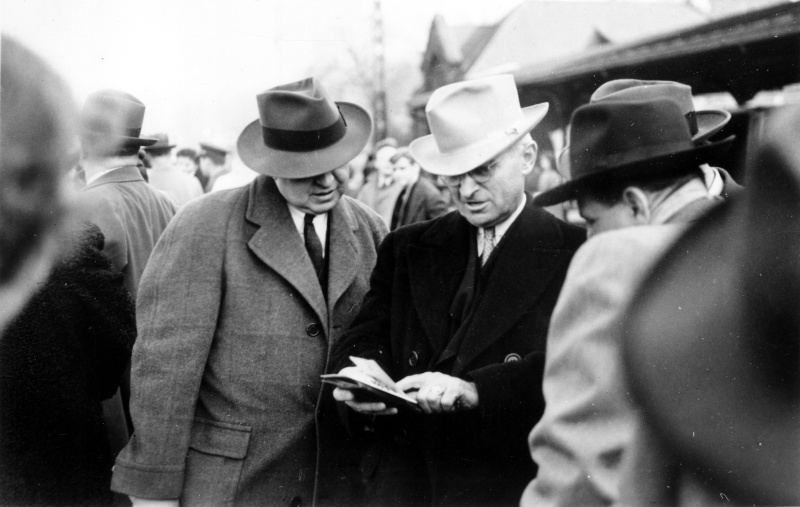
In 1941, the U.S. Senate created the Special Committee to Investigate the National Defense Program, commonly known as the Truman Committee after its chairman, Senator Harry Truman. The committee was tasked with examining defense contracts, production practices, labor conditions, military procurement, and government spending. Truman argued that individuals who profited from waste, poor-quality products, or delays in defense production were harming the nation just as surely as those who avoided military service.
Over the course of the war, the committee investigated a wide range of issues. Some inquiries focused on military production and quality control, such as defective steel and inefficient manufacturing practices. Others examined economic concerns, including costly government projects and questionable use of public resources. The committee also investigated Civil Rights issues that affected wartime production, including worker housing shortages, racial discrimination, and labor conditions at major defense facilities such as the Willow Run bomber plant.
The committee’s work demonstrated that congressional oversight could improve efficiency, reduce waste, and increase public confidence in government during a national crisis. At the same time, its investigations documented how World War II transformed American society by creating new opportunities for women and African Americans while revealing the persistence of segregation, discrimination, and unequal access to housing and employment. Through these investigations, students see how oversight can shape both government performance and social change.
Content Standards
Aligned with Michigan social studies content standards, this lesson helps students analyze the mobilization of economic, military, and social resources during World War II while evaluating the role of congressional oversight in promoting government accountability, protecting public resources, and responding to the challenges of a national emergency. Through evidence-based inquiry, students strengthen their historical thinking, civic reasoning, and argumentative writing skills.
Michigan students have the added benefit of a fascinating place-based look at the role that our state played in winning WWII.
MI USHG – 7.2.3 Impact of World War II on American Life Analyze the changes in American life brought about by U.S. participation in World War II, including:
- the mobilization of economic, military, and social resources.
- the role of women, African Americans, and ethnic minority groups in the war effort, including the work of A. Philip Randolph and the integration of U.S. military forces.
- the role of the home front in supporting the war effort.
- the conflict and consequences around the internment of Japanese-Americans.
Once you fill out this form, you will be redirected to our download page.
**If you have already filled out the download form, please look in your inbox for an email from LbH.LevinCenter@wayne.edu for a link to the download page.**
Can’t see the form below? Click here to access it.