The 13th, 14th and 15th Amendments - Congress investigates the KKK
For more resources on how to teach about race in the classroom, visit Race Talk: Engaging Young People in Conversations about Race and Racism from the Anti-Defamation League or Teaching Hard History: American Slavery from Learning for Justice.
Reconstruction Lesson Plan
This Reconstruction inquiry lesson examines whether congressional investigations can help the federal government respond to serious national problems. Students study the 13th, 14th, and 15th Amendments (the Reconstruction Amendments), the rise of the Ku Klux Klan, and Congress’ investigation into violence and voter suppression in the former Confederate states after the Civil War. The lesson is designed for secondary U.S. history students studying Reconstruction, civil rights, federal power, and congressional oversight.
Students engage with the material by analyzing constitutional amendments, Black Codes, political cartoons, congressional testimony from those personally impacted by Klan violence, investigative reports, timelines, and video sources on. The inquiry is guided by the Compelling Question: “Is it worth it for Congress to investigate problems?” Students use evidence from the Reconstruction era to evaluate whether congressional hearings and the Force Acts were effective responses to racial violence and political intimidation such as voter suppression.
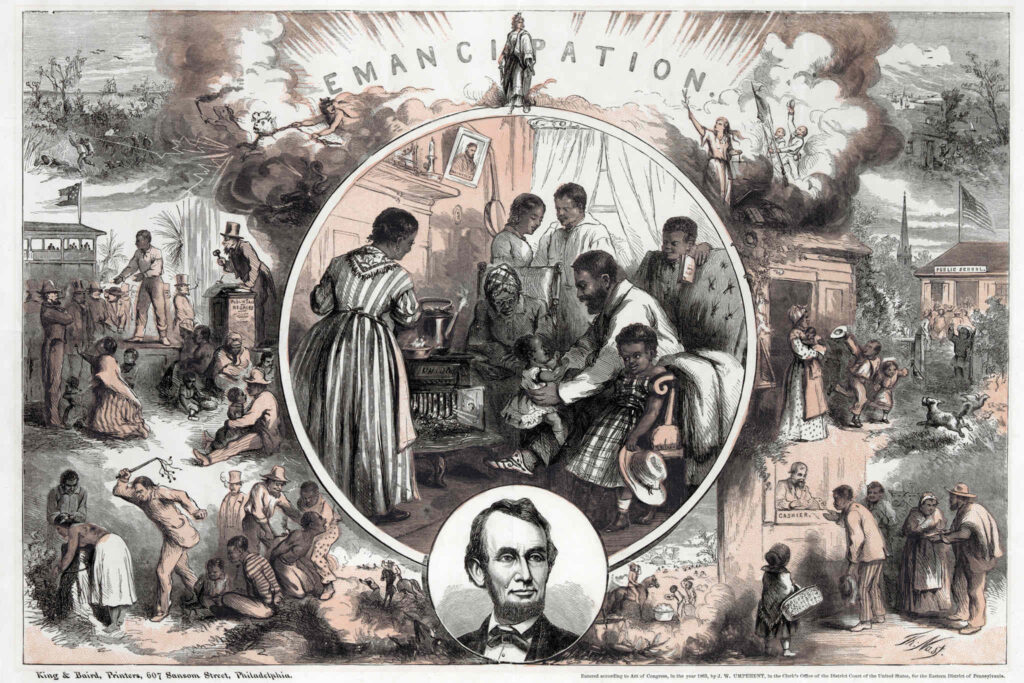
Emancipation of the Negroes. 1865. Library of Congress / Detroit Publishing Co.
This free download includes:
- Lesson Plan
- A three-day inquiry lesson where students evaluate the difference between the reality of Black Codes and the freedoms guaranteed in the 13th, 14th and 15th Amendments. Students will also examine Congress’ role in exposing the actions of the KKK and the effectiveness of the Force Acts passed to deal with threats of violence.
- Primary Sources
- Text of the 13th, 14th, and 15th Amendments to the US Constitution
- Selection of Black Codes from 1865
- “One Vote Less” political cartoon from 1868
- Excerpts from the congressional majority and minority reports
- Force Acts of the 1870s
- Secondary Sources
- Levin Center’s Portraits in Oversight Video: The KKK and Reconstruction
- Timeline of KKK activity in the United States
- Excerpt from Eric Foner’s “The Unresolved History of Reconstruction”
- Student Worksheets
- Printable and editable student worksheets that guide students through a comparison activity that asks students to evaluate how Southern Black Codes restricted liberty, political participation, and civil rights after the Civil War
- Scaffolded inquiry worksheets that guide students through evidence collection, source analysis, and claim development as they answer supporting questions about Reconstruction, the KKK, and federal enforcement of civil rights protections.
- Claim-Evidence-Reasoning (CER) writing activities
- Answer Key
- Teacher support materials that provide guidance for student responses and class discussion. Includes a completed key that contains evidence-based answers and direct quotes from primary sources.
Through congressional testimony, political cartoons, timelines, and primary source evidence, students evaluate whether constitutional amendments alone were enough to protect civil rights in the postwar South.
Supporting questions students wrestle with include:
- Why were the 13th, 14th, and 15th (the Reconstruction) Amendments adopted?
- How did the KKK work to suppress the rights of the formerly enslaved and their white supporters, and were the Reconstruction Amendments enough to stop it?
- Were the Force Acts passed by Congress effective?
Finally, students are asked to consider the legacy of Congress’ work investigating the Ku Klux Klan and civil rights abuses during Reconstruction by answering the compelling question: “Is it worth it for Congress to investigate if it doesn’t solve the problem?”
Reconstruction Snapshot
Our snapshot of Congress Investigates the KKK is a classroom-friendly version of our Portrait in Oversight on the same topic. Each of our snapshots is a brief summary of the historical investigation.
To enhance accessibility and support for multilingual learners, each download includes:
- Comprehension Questions
- These questions guide students through the key events of Congress’ investigation of the Ku Klux Klan, helping them identify what led to the investigation, who was involved, and why it mattered during Reconstruction
- Discussion Questions
- These prompts encourage deeper analysis by asking students to connect the investigation to broader constitutional principles, including civil rights protections, federal authority, and the role of congressional oversight
- Answer Key
- Teacher support materials that provide clear responses to both comprehension and discussion questions, making it easier to review student work and facilitate classroom discussion
- Audio and Spanish Versions
- An audio version and a Spanish version of the summary present the historical narrative in an accessible format, allowing students to engage with the content in a way that is accommodating to them.
Reconstruction Video
We’ve partnered with Detroit PBS to bring you our Portraits in Oversight video series. Congress’ investigation of Ku Klux Klan violence during Reconstruction revealed how organized groups attempted to undermine newly established civil rights. This short, classroom-ready video provides historical context and expert insight to help students understand how lawmakers gathered testimony, exposed widespread violence, and decided how the federal government should respond.
How did Congress respond to KKK violence during Reconstruction?
Neither slavery nor involuntary servitude, except as a punishment for crime whereof the party shall have been duly con-victed, shall exist within the United States, or any place subject to their jurisdiction.
Section 1, 13th Amendment (ratified December 6, 1865)
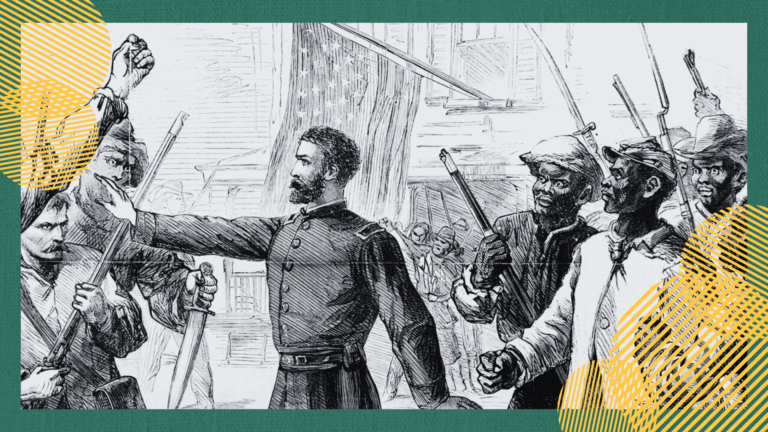
The end of the Civil War marked the beginning of radical change in the United States with the country taking action to recover from years of war, recognize the rights of four million formerly enslaved people, and protect African Americans from a violent backlash against their new status. During the 1870s, in a period now known as Reconstruction, Congress launched two extensive investigations into a frightening new organization, the Ku Klux Klan, exposed how it was terrorizing African Americans and their political allies in the South, and supported legislative such as the Force Acts, and vigorous use of federal authority to curb its brutality and lawlessness.
In the years following the Civil War, Congress enacted laws that represented the most significant advances in civil rights since the nation’s founding. This included the 13th, 14th, and 15th amendments, better known as the Reconstruction Amendments. As a result of these new civil rights protections, African Americans flooded onto the voter rolls. At the same time, racial violence and voter suppression in the former Confederate states accelerated. Many attributed the escalating violence to the growing strength of the Ku Klux Klan. Congress decided to form an investigative committee to dig into the facts.
Content Standards
This inquiry-based middle and high school U.S. history lesson plan aligns with Michigan social studies standards by helping students analyze Reconstruction era civil rights legislation, congressional investigations, and the federal government’s role in protecting constitutional rights.
MI USHG – F1.1 Identify the core ideals of American society as reflected in the documents below, and analyze the ways that American society moved toward and/or away from its core ideals:
- Declaration of Independence.
- Original United States Constitution (including the Preamble).
- Bill of Rights.
- Gettysburg Address.
- 13th, 14th , and 15th Amendments
MI Civics – 4.2.3 Using the 14th Amendment, describe the impact of the doctrine of incorporation, due process of law, and equal protection of law on the articulation and extension of rights.
Once you fill out this form, you will be redirected to our download page.
**If you have already filled out the download form, please look in your inbox for an email from LbH.LevinCenter@wayne.edu for a link to the download page.**
Can’t see the form below? Click here to access it.